TUSCANY: VISITING THE MAIN MUSEUMS
The museums of Tuscany bear witness to centuries of commitment to collecting and preserving treasures of inestimable value.
Siena – National Picture Gallery (Pinacoteca Nazionale)
This palace among the various museums of Tuscany, houses the
finest and most complete collection of Sienese painting in
existence, from its origins to the 18th century. On its walls
alternate works by Duccio, the Lorenzetti brothers, Simone
Martini, Francesco di Giorgio, Beccafumi, Sodoma, Francesco Vanni,
and Bernardino Mei.
On the top floor, visitors are pleasantly surprised by the
Spannocchi-Piccolomini collection, which includes masterpieces by
artists such as Lorenzo Lotto and Albrecht Dürer. An unforgettable
visit for lovers of Sienese art and Northern European painting.
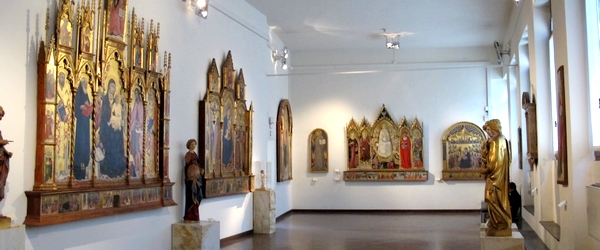
Prato – Diocesan Museum
The museum preserves a beautiful collection of paintings,
sculptures, goldsmith works, textiles, and miniatures, with the
oldest pieces dating back to the 11th–12th centuries. Together,
these works tell the story of Prato and its Cathedral through the
centuries, for this reason it reppresents an important visit among
the museums of Tuscany.
The jewel of the collection is Donatello’s famous pulpit,
originally created for the façade of the Cathedral and moved here
for conservation reasons after restoration. Made of marble,
bronze, and mosaic tesserae, it is still used for the public
display of the relic of the Sacred Girdle of the Virgin.
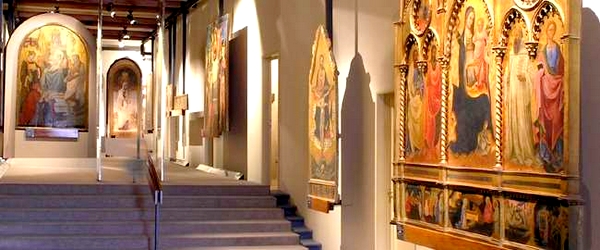
Pisa – National Museum of San Matteo
Among Tuscany’s museums beyond the most famous tourist
destinations, the National Museum of San Matteo is one of the most
interesting visits. It houses a rich collection of gold-ground
panel paintings from the 12th to the 14th centuries, as well as
important Renaissance sculptures and works of art.
Artists such as Nicola Pisano, Simone Martini, Gentile da
Fabriano, Masaccio, Donatello, and Ghirlandaio are represented
alongside important local painters including the master of San
Martino, Giunta Pisano and Francesco Traini. Visit the Museums of
Tuscany, they are an artistic heritage of inestimable value.
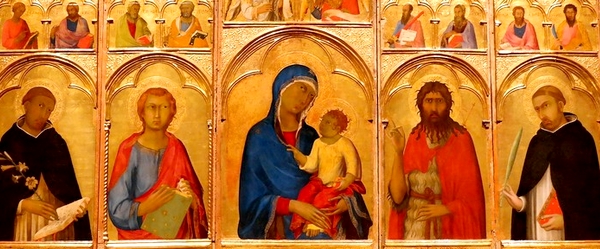
Pistoia – Civic Museum
As another suggestion for visiting the museums of Tuscany I
recommend the Civic Museum of Pistoia, located inside the imposing
Palazzo Comunale begun in 1295, is the city’s most important
museum. It allows visitors to journey through seven centuries of
Pistoian and Florentine art (13th–19th centuries).
The collection includes paintings, sculptures, and decorative arts
from suppressed churches and convents, as well as acquisitions and
bequests such as the Puccini Collection. Notable works include a
13th-century panel of Saint Francis and the Madonna della Pergola
by B. Detti.
Arezzo – Museum of Medieval and Modern Art
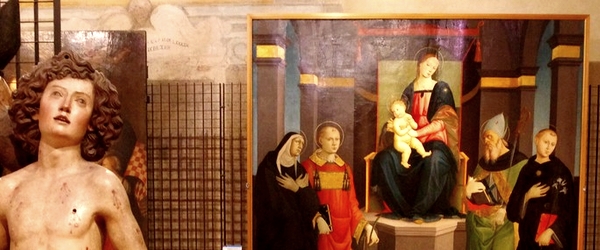
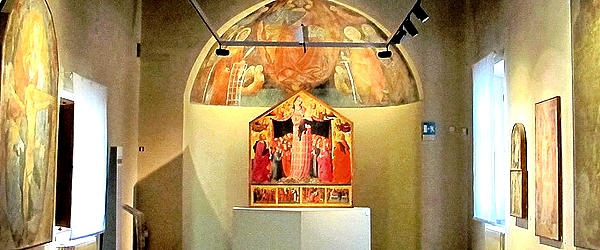
Housed in Palazzo Bruni Ciocchi, known as ‘della Dogana,’ one of
the most beautiful Renaissance palaces in the city, this museum is
based on two main collections: works belonging to the Fraternita
dei Laici and to the Municipality of Arezzo.
Highlights include the 13th-century Madonna and Child by Margarito
d’Arezzo, the Madonna of Mercy by Parri Spinelli, works by
Bartolomeo della Gatta, and Giorgio Vasari’s monumental Banquet
for the Wedding of Esther and Ahasuerus. Due to the richness of
its collections it can certainly be counted among the most
representative museum of Tuscany and Arezzo area.
Lucca – Villa Guinigi and Palazzo Mansi Museums
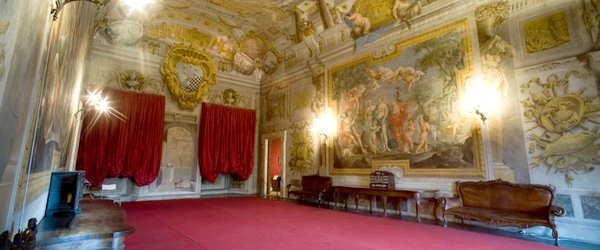
These two museums, housed in important historic buildings in the
city center, display collections closely connected to the
territory of Lucca, covering a vast chronological span.
From local archaeological finds dating back to the 8th century BC
to artists such as Angelo Puccinelli, Matteo Civitali, and Pompeo
Batoni, these museums also feature major Italian artists of
different centuries, making these museums among the most important
in the country and a visit of them is a unique experience. It is
undoubtedly one of the most popolar museum visit in Tuscany.
Carrara – Civic Marble Museum
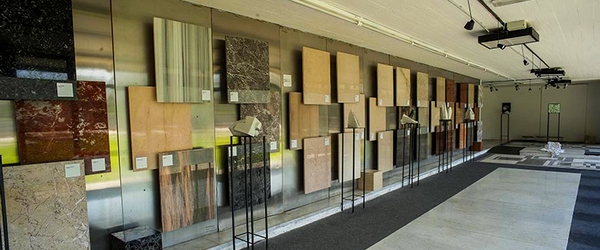
Opened in 1982 to document the local culture of marble, the Civic
Marble Museum of Carrara offers an engaging visit of the Museums
of Tuscany dedicated to the promotion and preservation of this
important aspect of history and culture of the region.
The collections trace the material culture of marble in Carrara
from Roman times, through the extraction activity of
Michelangelo’s era, up to the present day. A marble library of
more than 300 samples showcases important Italian marbles and
significant granites and stones from around the world.
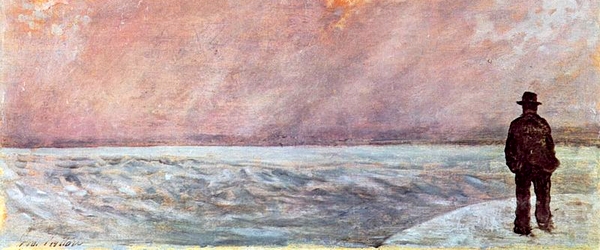
Livorno – Giovanni Fattori Civic Museum
Among the Museums visits in Tuscany, I’d like to point out this
museum located in the prestigious Villa Mimbelli houses an
important collection dedicated to 19th-century Italian painting,
particularly Tuscan and Livornese art.
In addition to Giovanni Fattori, leading representatives of the
Macchiaioli movement such as Silvestro Lega, Telemaco Signorini,
Giovanni Boldini, and Vincenzo Cabianca are featured, alongside
later post-Macchiaioli and Divisionist artists. In the vision of
this Museum of Tuscany one of the best showcases of italian
painting between the XIX end XX centuries.
Grosseto – Archaeological Museum of the Maremma
The visit at this Museum, haused in a 19th-century building that
once served as the old courthouse, will illustrate to you the rich
archaeology of the Maremma region.
Founded in 1860 by Canon Giovanni Chelli, the collection includes
Etruscan cinerary urns from Volterra and Chiusi, as well as finds
from the ancient cities of Roselle, Vetulonia, and Vulci. Among
the Museums of Tuscany this visit offers a valuable opportunity to
explore a less-known yet historically significant part of Tuscany.