FLORENCE: THE MAIN MUSEUMS
The wonders of this city are contained, like in a treasure chest, within its fabulous museums. Each museum is a window into Italian art and culture, an endless source of knowledge and beauty.
UFFIZI GALLERY
It is among the most important museums in Florence and the oldest
museum of modern Europe. Over its four hundred years of history,
it has gathered an extraordinary number of works of art,
distributed across its 42 rooms. Many of the most famous paintings
in the world—images we know for their immense popularity—are
preserved in this monumental building, whose visit will leave you
with an unforgettable memory.
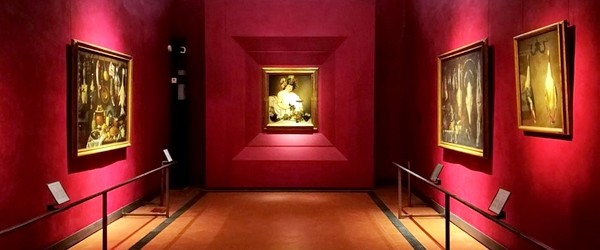
Think of Botticelli’s Birth of Venus and Primavera, Piero della
Francesca’s portraits of the Dukes of Urbino, Titian’s Venus,
Raphael’s Madonna of the Goldfinch, Michelangelo’s only fully
authenticated panel painting, and Caravaggio’s Bacchus and Medusa.
These are just a few of the masterpieces housed here—much more
awaits you if you treat yourself to a visit to the Uffizi Gallery.
PALATINA GALLERY
Imagine a centuries-old Florentine royal residence, Palazzo Pitti,
inhabited by three ruling dynasties: the Medici, the
Habsburg-Lorraine, and the House of Savoy. A monumental staircase
leads to the rooms that house the rich private court collection
known as the Palatine Gallery. During your visit, forget
chronological or geographic order—instead, admire walls completely
covered with important and famous paintings, surrounded by antique
furnishings and decorations.
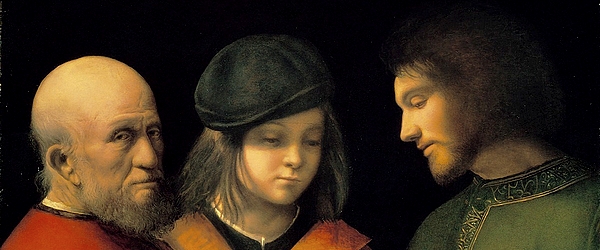
In this atmosphere, you will encounter masterpieces by Raphael,
Caravaggio, Titian, Perugino, Filippo Lippi, and many others. Like
all great royal residences, Palazzo Pitti is accompanied by the
magnificent Boboli Garden, a very important and elegant examples
of an Italian-style garden and an extraordinary open-air museum.
THE ACADEMY GALLERY
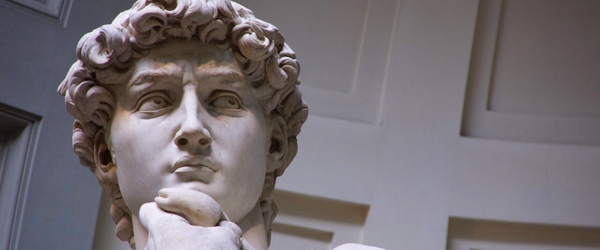
Among Florence’s museums, the Academy Gallery is the most visited,
welcoming around one million visitors each year. This enormous
success is due to the presence of one of the most celebrated works
of art in the world: Michelangelo’s David.
What makes it so extraordinary? The fascination, power, and
perfection of this masterpiece can only be understood by standing
before it in person. I will be delighted to accompany you on this
unique museum experience in Florence. A truly unique visit to
Florence’s museums.
THE MUSEUMS OF PITTI PALACE
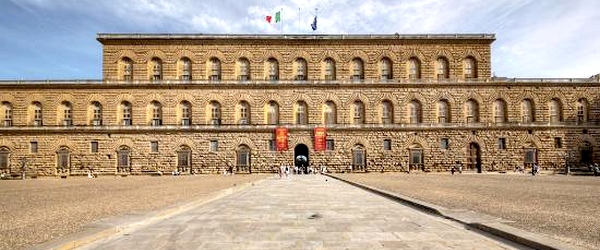
Built for Luca Pitti as a challenge to the Medici family—who later
purchased it in the 16th century— Pitti Palace became the official
residence of the Grand Dukes of Florence and Tuscany, and later
the Palace of the King of Italy. Expanded several times over the
centuries, it now houses rich museums preserving masterpieces of
painting, sculpture, and decorative arts.
I recommend visiting the Palatine Gallery (16th–19th century
paintings), the Gallery of Modern Art, the Treasury of the Grand
Dukes (formerly the Silver Museum), and finally the lush greenery
of the Boboli Gardens.
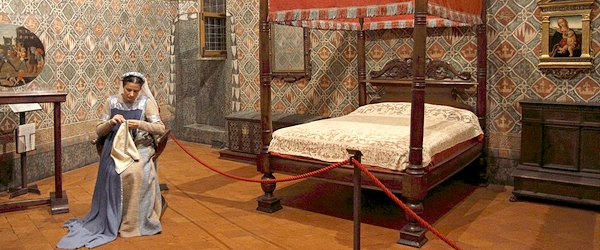
DAVANZATI PALACE
Davanzati Palace represents the link between the medieval tower
house and the Renaissance palace. Through our visit, you will
experience daily life in a Florentine merchant family between the
Middle Ages and the Renaissance.
Furnished in the 19th century as the Museum of the Old Florentine
House, it displays furniture, artworks, and domestic objects
harmoniously arranged alongside its remarkable 14th-century
frescoes. It is one of the most important museum of Florence to
understand the florentine story and culture.
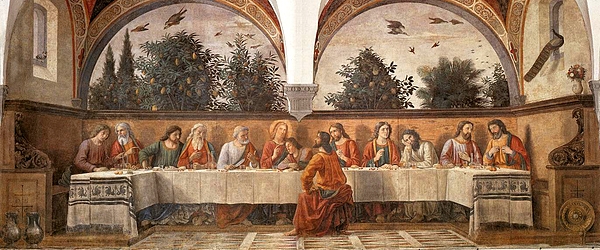
MUSEUM OF SAN MARCO
The museum is housed in the former convent of San Marco, renovated
in the 15th century by Michelozzo for Cosimo the Elder. It
contains the largest collection in the world of works by Fra
Angelico, including both frescoes and panel paintings. Your tour
guide to the most important museums of Florence will also reveal
the structure of thw convent.
It is arranged on two levels: the ground floor includes the
communal spaces of the friars, while the upper floor features
numerous monastic cells, including those once used by Fra Girolamo
Savonarola, as well as a beautiful library.
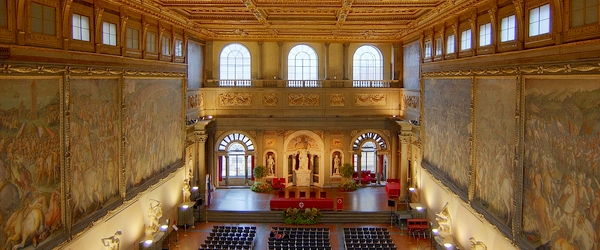
PALAZZO VECCHIO “OLD PALACE”
From the seat of the Priors of the Florentine Republic to the
palace of the Grand Duke. With a visit to one of the most
important museum of Florence we can enter in the rooms of the
political heart of the city.
The visit begins in the immense Hall of the Five Hundred,
dedicated to the celebration of Florence and Cosimo I, and ends in
the fascinating Hall of Geographical Maps.
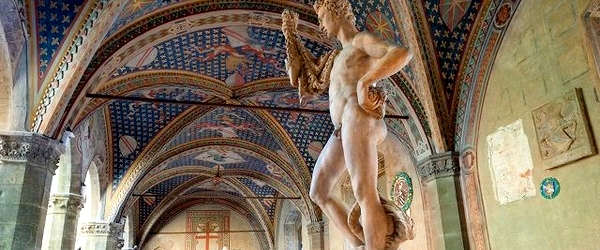
NATIONAL MUSEUM OF THE BARGELLO
Among the visit of the most important museums of Florence, this is
perhaps, aliitle forgotten by traditional tourist tours. the
Bargello is one of the most important museums in the world for
sculpture and decorative arts. It houses masterpieces by
Donatello, Verrocchio, the Della Robbia family, and Michelangelo.
Beyond the exceptional quality of its collections, the building
itself has a fascinating history closely linked to the city of
Florence.
MUSEUM OF THE OPERA DEL DUOMO
Reopened in October 2015 after extensive restoration, this museum
was redesigned toenhance the display of its masterpieces. Spacious
galleries and intelligent architectural choices create
breathtaking perspectives, including Michelangelo’s moving Pietà.
You will also admire the original hexagonal panels from Giotto’s
Bell Tower, sculptures including Donatello’s Prophets, the
Cantorie by Luca della Robbia and Donatello, and finally an
extraordinary close view of Brunelleschi’s Dome from the museum
terrace. It will be an engaging and fascinating visit to one of
the most important museums of Florence.
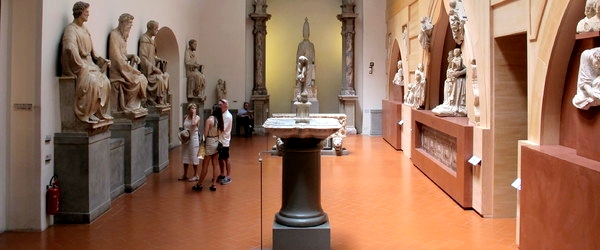
PROPOSALS AND ITINERARIES
Before or after your museum visit, you may enjoy a pleasant walk discovering the art, culture, and ancient history of Florence.
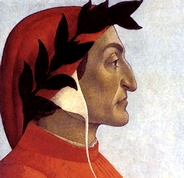
In Dante’s traces in Florence
The most important itinerariesA guided tour through medieval Florence, including the Dante House Museum and a walk among tower houses and narrow streets, following the traces of the Supreme Poet.
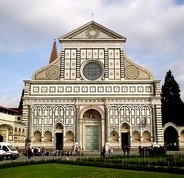
Between Sacred and Profane
The most important itinerariesThis itinerary includes a visit to the Basilica of Santa Maria Novella, the religious heart of the city (Cathedral of Santa Maria del Fiore, Baptistery of San Giovanni, Giotto’s Bell Tower), and concludes in Piazza della Signoria, Florence’s political and civic center.
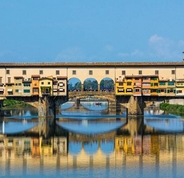
Florence – Capital of Italy
The most important itinerariesFlorence was the capital of the Kingdom of Italy from 1865 to 1871. This itinerary explores the urban transformations of that period and the prominent cultural figures who contributed to the birth of the Italian nation.